The Story of Dowth
From Neolithic monument to UNESCO World Heritage Site—a journey through five thousand years of history
What is Dowth?
Dowth is a large passage tomb located in the Boyne Valley of County Meath, Ireland. The Irish name Dubhadh, meaning "darkness" or "darkening," reflects the monument's profound connection to light, shadow, and the winter solstice.
The mound measures approximately 85 metres in diameter and stands about 15 metres high, making it one of the largest passage tombs in Ireland. It contains two known passage tombs—referred to as Dowth North and Dowth South—each featuring chambers decorated with megalithic art.
Unlike Newgrange, where the winter solstice sunrise illuminates the chamber, Dowth is aligned to capture the setting sun during the winter solstice. As the shortest day draws to a close, sunlight travels down the passage and illuminates the back chamber—a moment of light in the gathering darkness.
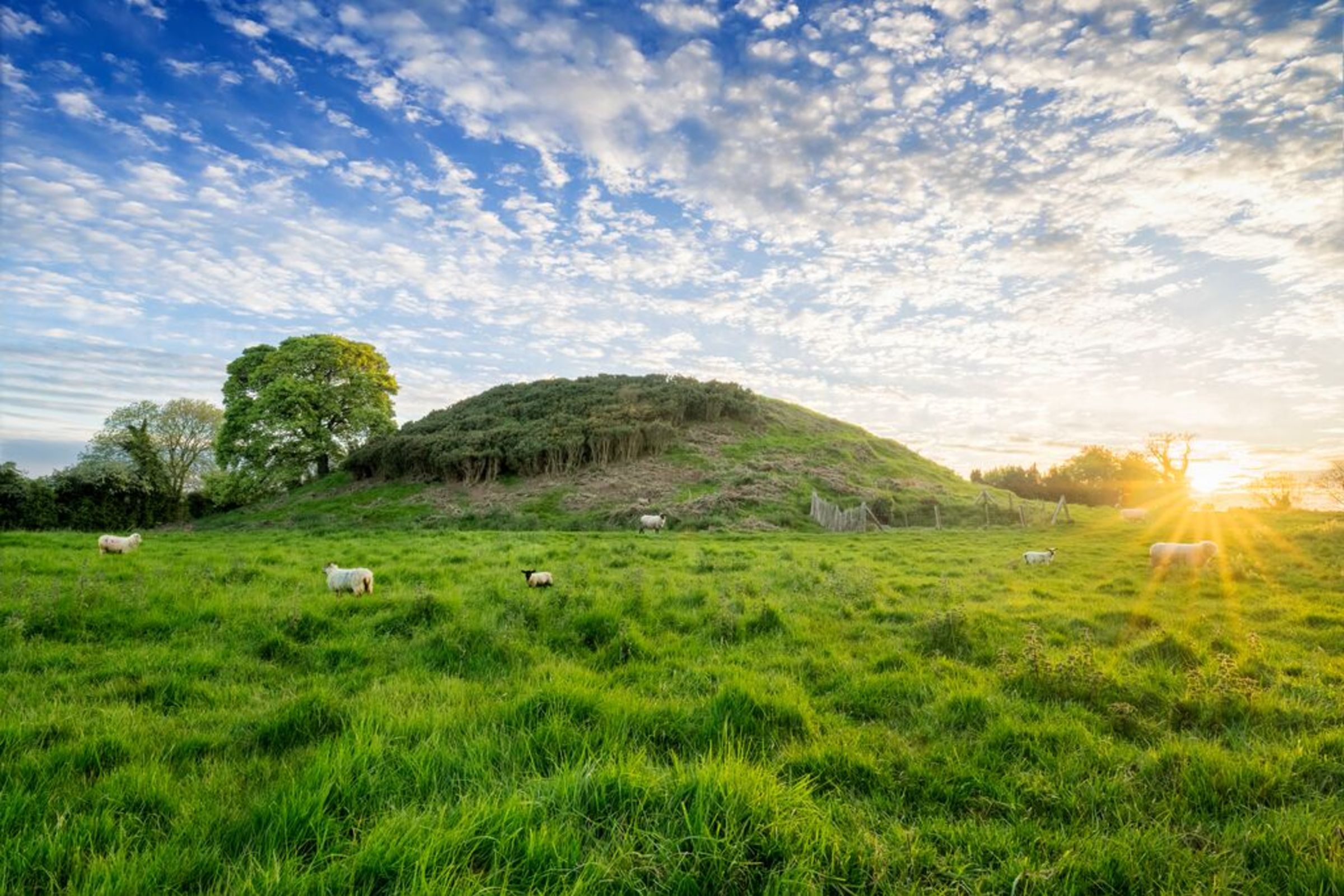
The ancient mound of Dowth rises from the landscape
The Brú na Bóinne Complex
Dowth stands at the eastern edge of the Brú na Bóinne (Boyne Palace) complex, one of the world's most important archaeological landscapes. This bend in the River Boyne contains an extraordinary concentration of prehistoric monuments including passage tombs, standing stones, henges, and enclosures.
The three great passage tombs—Newgrange, Knowth, and Dowth—dominate the landscape, but they are surrounded by dozens of smaller monuments. Together, they represent the remains of a vast ceremonial and burial complex constructed by Neolithic farming communities.
In 1993, the Brú na Bóinne complex was inscribed as a UNESCO World Heritage Site, recognising its outstanding universal value as a testament to human creativity and the spiritual beliefs of our prehistoric ancestors.
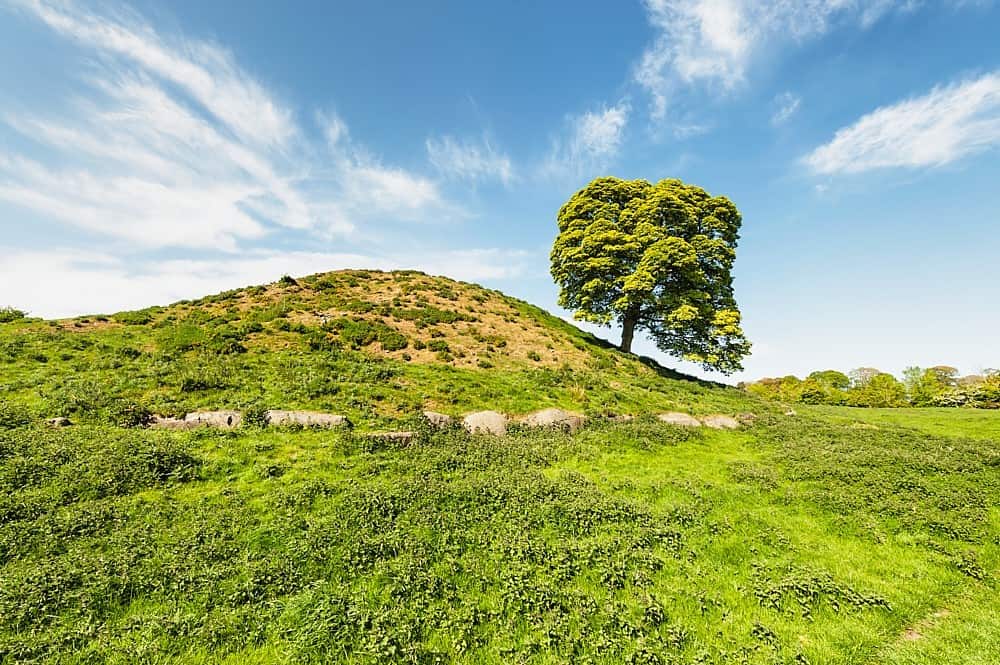
The weathered stones of Dowth's passage tomb
The Passage Tomb Tradition
Passage tombs represent one of the most sophisticated architectural achievements of Neolithic Europe. These monuments consist of a narrow passage leading to one or more burial chambers, all covered by a large mound of earth and stone.
The builders of Dowth and its neighbouring monuments possessed remarkable engineering knowledge. They transported massive stones—some weighing several tonnes—across considerable distances, precisely aligned their structures with astronomical events, and decorated the stones with intricate carved designs.
The spiral patterns, lozenges, and curved motifs found on the stones are often described as "megalithic art." While their precise meaning remains unknown, they likely held deep spiritual significance for the communities who created them.
Later History and Folklore
Long after its original builders passed from living memory, Dowth continued to hold power in Irish imagination. Early medieval monks recorded stories connecting the mounds to the Tuatha Dé Danann—the mythological inhabitants of Ireland before the coming of the Gaels.
In these stories, the mounds were said to be the dwelling places of supernatural beings, gateways to the Otherworld. The Dagda, chief of the Tuatha Dé Danann, was associated with the Brú na Bóinne, and the monuments featured in tales of love, magic, and transformation.
The modern archaeological study of Dowth began in 1847 when the Royal Irish Academy conducted excavations. Though the methods of the time would not meet modern standards, these early investigations documented important carvings and architectural features that might otherwise have been lost.
Timeline
Key moments in the story of Dowth
Construction of Dowth
Neolithic farming communities construct the passage tomb at Dowth, aligning it with the setting sun during the winter solstice. The monument is built using massive stones, some weighing several tonnes.
Peak of Passage Tomb Tradition
The Brú na Bóinne complex—including Newgrange, Knowth, and Dowth—becomes a centre of ritual activity. The landscape is shaped by generations of builders who create satellite tombs and ceremonial spaces.
Bronze and Iron Ages
The monuments continue to hold significance as later peoples interact with the ancient landscape. New burials and offerings are added, showing continued reverence for these sacred places.
Celtic Iron Age
Irish mythology begins to incorporate the mounds into stories of the Tuatha Dé Danann and the Dagda. Dowth (Dubhadh, meaning 'darkness' or 'darkening') enters the oral tradition.
Early Medieval Period
Christian monks record ancient stories and place names. The monuments remain landmarks in the landscape, though their original purpose fades from living memory.
Victorian Excavation
The Royal Irish Academy conducts excavations at Dowth. Though methods differ from modern archaeology, important carvings and chambers are documented for the first time.
UNESCO World Heritage Status
Brú na Bóinne is inscribed as a UNESCO World Heritage Site, recognising the outstanding universal value of the prehistoric monuments and cultural landscape.
Conservation and Study
Ongoing archaeological research continues to reveal new insights about Neolithic society. The monuments are protected and preserved for future generations to appreciate.
Further Reading
-
World Heritage Ireland – Brú na Bóinne
Official information about visiting and protecting the UNESCO site
-
National Monuments Service
Archaeological records and monument protection information
-
Archaeological Survey of Ireland
Database of recorded archaeological monuments